

If you have aches, suffered a strain, or had another type of muscular injury, you’ve probably heard some people tell you to “put ice on it” or to “add some heat to it.” If that contradictory advice has you feeling confused- we can help.
Let’s start by briefly analyzing what heat and cold actually do for an injury:
- Heat dilates your vessels, helping bring more blood to an injured area (essentially speeding up recovery time). It also promotes muscle relaxation and reduces stiffness and spasms by flushing out chemical byproducts, like lactic acid for example. You should not use heat for the first 48 hours after an injury. In those first hours after your injury occurs, tissues signal the brain that there’s been an injury. In response, your brain then signals your body to release chemicals necessary for healing- but in order to deliver all those extra cells and chemicals, swelling ensues. Applying heat during this time would draw even more blood and fluids to the area, which can actually do the opposite of what you want, and delay healing.
- Cold constricts your blood vessels, slowing the amount of blood being delivered to the injured area. This helps to reduce swelling and inflammation, in addition to reducing any bleeding that may have occurred. It also helps to numb the affected area, decreasing the sensation of pain.
In short, if you have pain, but no swelling, you should opt to use heat for your injury. You can also take ibuprofen or another pain reliever to help with the discomfort. This is also the best option for chronic pain. However, if you notice visible swelling, ice would be a more appropriate option to aid in your recovery and you can add on the pain reliever as well for extra support.
If you’re looking for how to make the best compresses for your injury. Here are some ideas:
Heat therapies:
- Heating pad
- Rice bag (you can also fill a sock with rice and microwave for about 1 minute)
- Warm bath

Cold therapies:
- Frozen ice pack
- Plastic bag filled with ice
- Plastic water bottle filled with ice water (or use a previously frozen water bottle)
- Bag of frozen vegetables, such as peas
- Immersing are in cold water
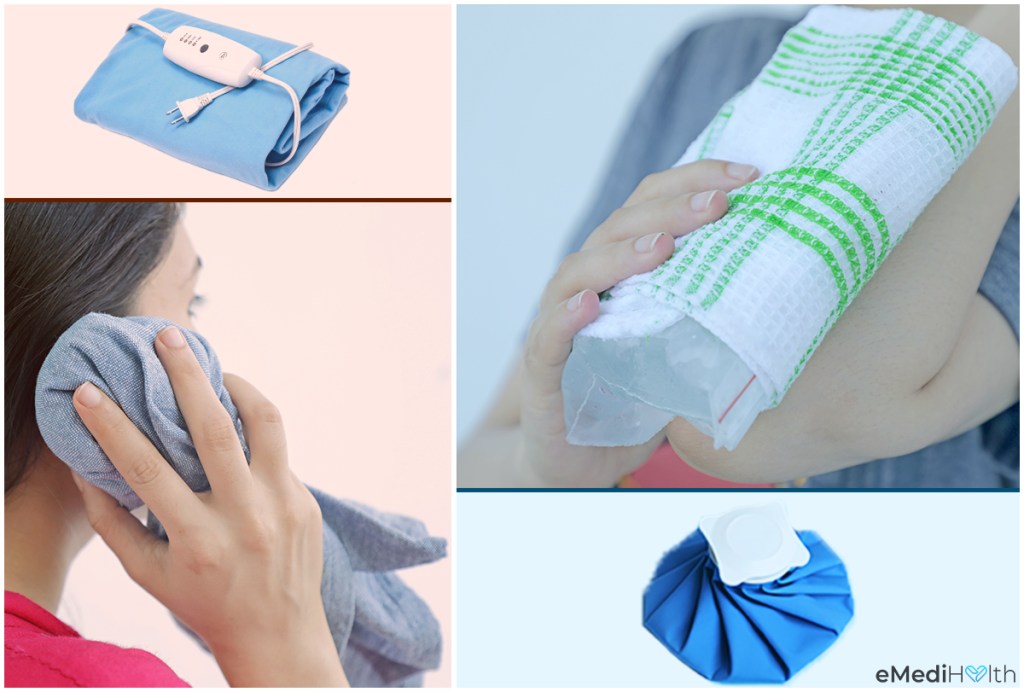
Keep in mind, you should never use extreme heat or place ice directly on the skin to avoid burns. You can wrap ice packs in a towel to avoid direct contact.
As always, visit your doctor if the pain is severe, or your symptoms worsen.
 dose of greens